

Clemet of Alexandria on the Rich Young Man
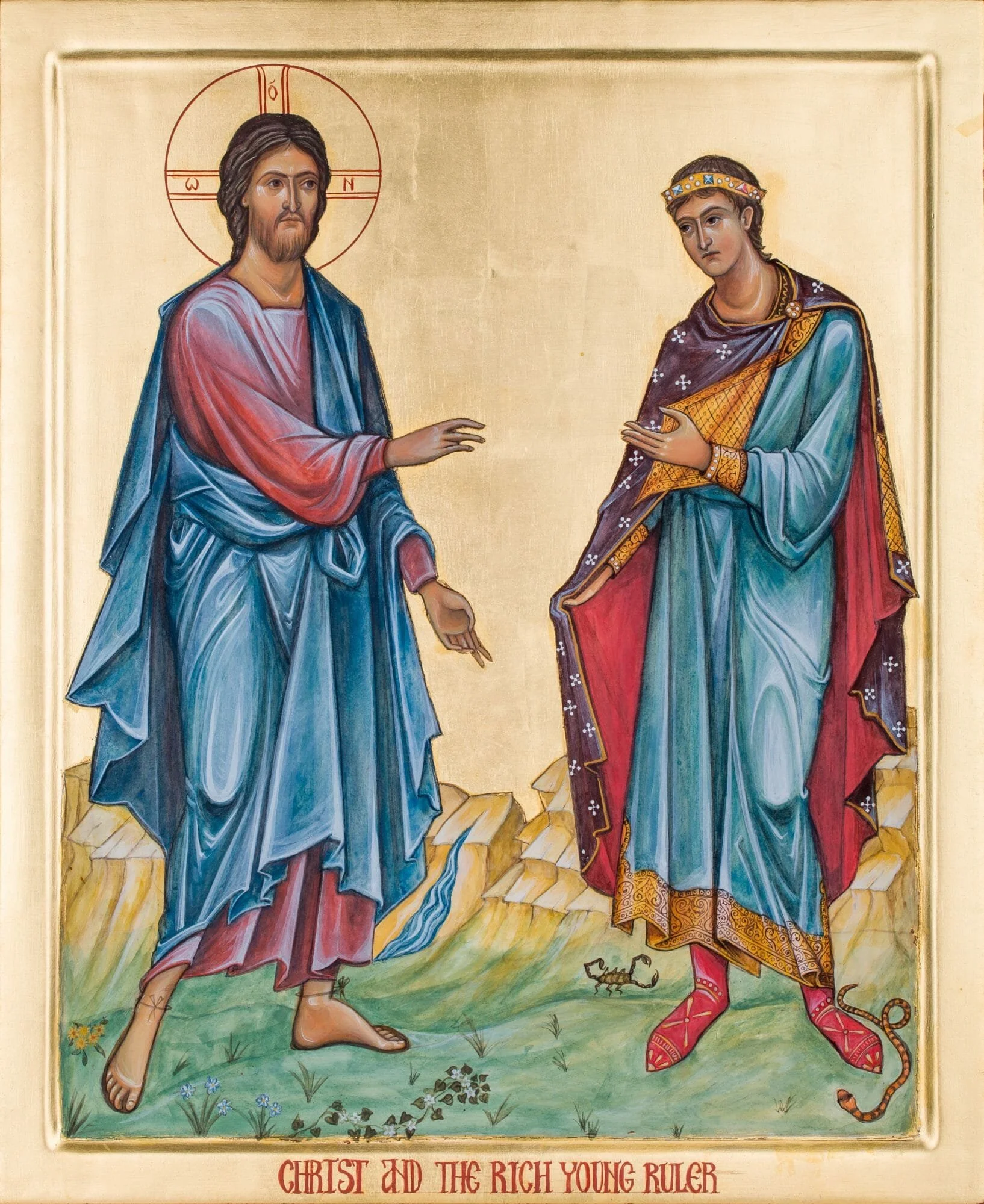
Dear Saints, Our Lord Jesus, when interacting with the rich young man, tells him at the end to “Go, sell all you have, give to the poor, and come, follow me.” At this the man goes away sorrowful, not because he had too much stuff, but because his stuff had become his security, his identity, and ultimately, his Lord. In this interaction, our Lord reminds us that the danger of wealth is not in the mere possession of wealth, but that this wealth has a capacity to possess and rule the person.
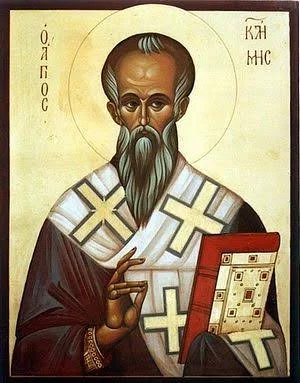
Writing around 200 AD, one of the great fathers of the Church, Clement of Alexandria, comments on this passage in a text titled “Who is the rich man that shall be saved?”. Here, he compared wealth to an instrument. An instrument may be used skillfully or poorly, but the instrument itself does not determine how it will be used. In the same way, money and property (as instruments) may become servants of righteousness or servants of selfishness. Wealth is not meant to rule us. It’s meant to be placed under God’s Word and used according to His purposes.
Everything we possess comes from God. Our homes, savings, businesses, abilities, opportunities, and daily bread are gifts entrusted to us by our heavenly Father. They are not given merely for our private enjoyment. God gives them so that we may provide for our families, support the work of the Church, assist our neighbors, and care for those who suffer.
Clement therefore argues that wealth which benefits our neighbors should not simply be discarded. It can become material for works of love. A person with sufficient resources may feed the hungry, clothe the poor, shelter those in need, support the proclamation of the Gospel, and provide assistance during times of crisis. The Christian should regard possessions as gifts from God that are held, in part, for the sake of others.
The question is not merely, “How much do I have?” but instead: “What place do these possessions hold in my heart?” Do I regard them as gifts entrusted to me or as treasures that belong entirely to me? Do I use them in faith and love, or do I cling to them in fear? Could I receive their loss with trust in God, or has my happiness become dependent upon them?
A person may have little money and still be consumed by envy, greed, anxiety, and discontent. Another person may possess considerable wealth while remaining generous, content, and ready to serve. The issue is not the amount or quantity but how we view and consider the possessions. Whether what God has given to us has become our master or whether we have come to use it in service to our Lord and Master Jesus. As our Lord notes: “Where your treasure is, there your heart will be also.” The problem is not that earthly treasures exist. The problem comes when our hearts are enclosed within them. Christian stewardship cannot be reduced to advice about budgeting, charitable giving, or responsible financial planning. Those things are useful, but they cannot free the heart from greed or fear. Only Christ can do that.
The rich young man lacked one thing. He had outward obedience, possessions, and respectability, but he didn’t recognize the treasure standing before him, the Lord Jesus Himself. Jesus was calling the man away from a treasure that would perish and toward the One who gives eternal life. Clement describes the Savior as the One who feeds us by giving Himself as bread, supplies the drink of immortality, teaches the things of heaven, contends with death, and pays the debt that our sins had earned. This is the true wealth of the Christian.
We possess Christ—or, more properly, Christ has made us His own. In Him we have forgiveness of sins, peace with God, adoption as the Father’s children, the gift of the Holy Spirit, and the promise of the resurrection. These treasures cannot be consumed by inflation, destroyed by disaster, exhausted by use, or tak- en away by death. Jesus did not purchase this treasure for us with silver or gold. He purchased us with His holy, precious blood and His innocent suffering and death. Through Baptism, the Gospel, and the Lord’s Supper, He continually gives us the riches He won upon the cross.
Because Christ has given Himself to us, we no longer need to treat earthly possessions as though they were our only security. We may hold them with open hands. We can give without believing that every gift diminishes us. We can serve without fearing that we will be forgotten. We can share because our eternal inheritance is already secure in Christ. And we remember especially that our generosity does not purchase salvation. Eternal life is not a financial transaction, and no amount of charitable giving can pay for sin. Salvation is God’s free gift in Jesus Christ.
Nevertheless, faith in Christ produces love for the neighbor. The person who knows the generosity of God begins to become more and more generous. The person who has received mercy begins to show more and more mercy. The person who has been given an eternal treasure becomes willing to use temporary treasures for the good of others.
Clement urges Christians not merely to wait until someone asks for assistance but to seek opportunities to show kindness. This is because Christian love looks outward. It notices the hungry, the lonely, the struggling family, the grieving widow, the neglected child, and the neighbor in need. And it seeks to help as we have been given the opportunity and means to do so.
Our earthly wealth is temporary. It will eventually pass into the hands of another. The treasure we have in Christ, however, is eternal. Therefore, we need not hoard what is passing away. We may use it faithfully, wisely, and joyfully in service to God and our neighbor. The richest person is not the one who has accumulated the most. The richest person is the one who has Christ. And the person who has Christ possesses a treasure that can never be lost.
“For you know the grace of our Lord Jesus Christ, that though He was rich, yet for your sake He became poor, so that you by His poverty might become rich” –2 Corinthians 8:9.
In Christ,